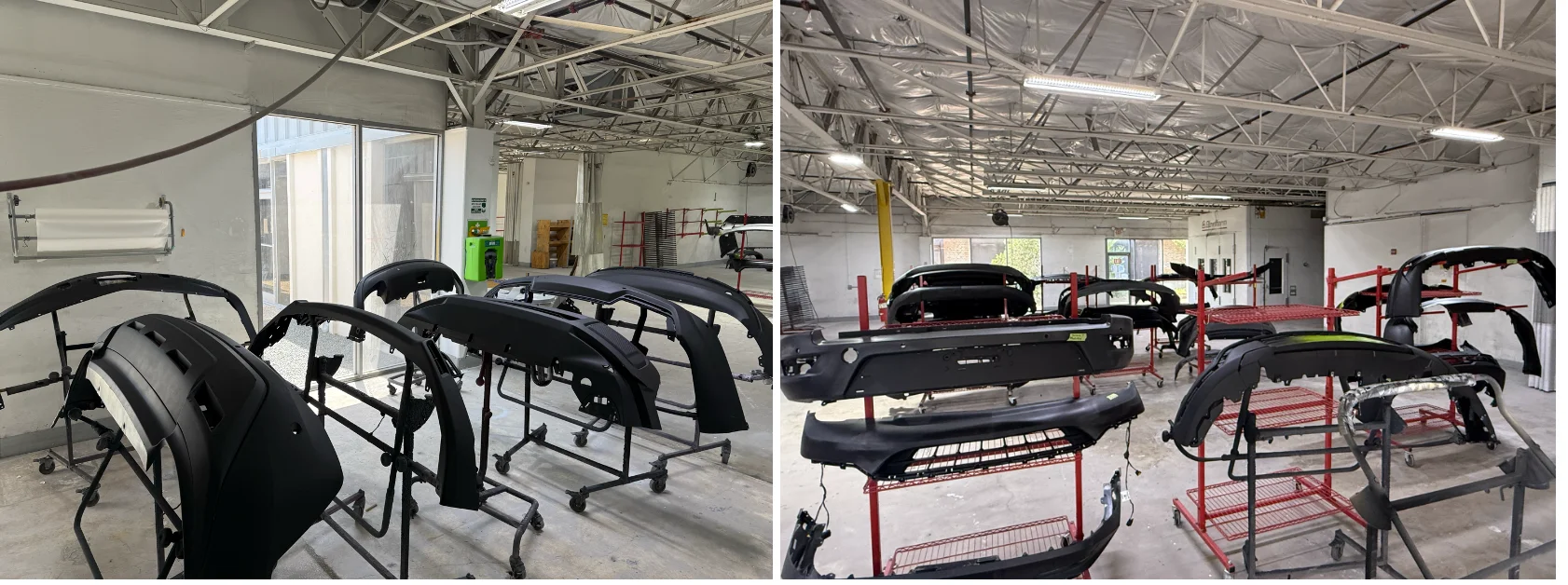
Plasnomic is moving its Textured Parts Repair program from the Discovery Phase into the Verification Phase, focused on determining how textured plastic repair can be successfully implemented into everyday collision repair workshop processes.
The Discovery Phase included the assessment of more than 150 textured parts, over 120 documented research hours, controlled application scenarios and hundreds of spray out cards. Extensive industry analysis was also conducted across suitable 2K texture products, spray guns, application variables and abrasive finishing systems, with particular focus on preparing repair areas without damaging the original OEM Mould in Part texture.
Microscopic analysis at approximately 50x magnification was used to better understand OEM grain structure, including peaks, valleys, density and grain variation. Research also identified five key application controls: gun selection, air pressure, spray distance, material flow and coat count.
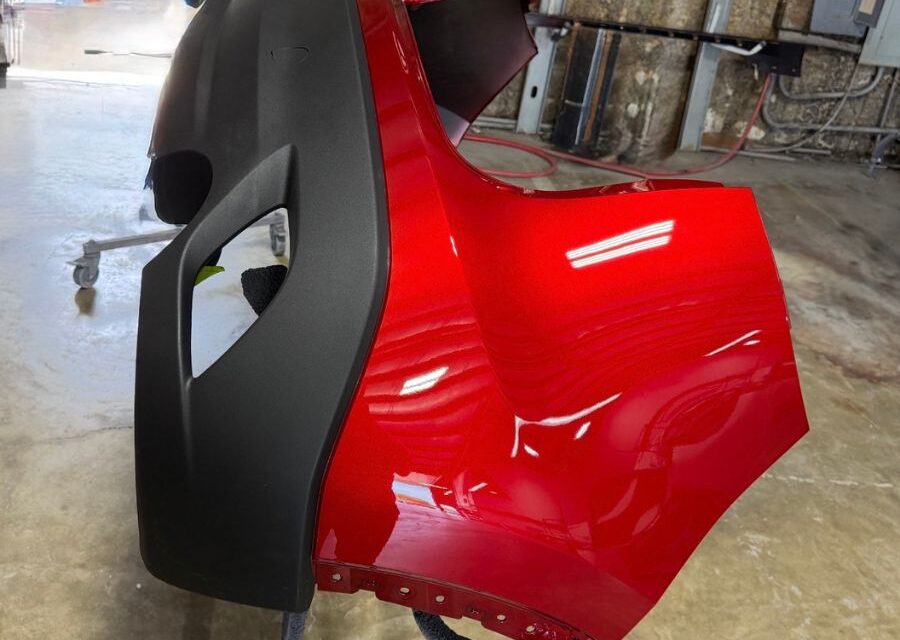
Initial results have demonstrated that the repair process is technically achievable. The documented validation achieved grain restoration across 12 of 12 repairs, while the broader program has now completed 14 live repairs, with no identified visual concerns relating to grain or color once installed on the vehicle.
The Verification Phase will now move the process into two MSO environments to determine whether it makes sense across four critical areas: product performance, technician training and repeatability, commercial viability, and cycle time.
This will include evaluating repair versus replacement economics, material and labor charging, technician workflow, training requirements and whether suitable 2K texture processes can be completed in prep areas using natural curing rather than consuming valuable paint booth capacity.
In parallel, laboratory testing will continue to verify product and repair performance. The objective is now to demonstrate not simply that textured plastic can be repaired, but that it can be trained, priced, performed and repeated successfully within a real collision repair workshop environment.