

The Plasnomic Framework continues to bring together industry leaders to transform the future of automotive plastic repair.
One of the latest examples is the successful plastic repair workshop hosted in Berlin, where IRS Group, one of Plasnomic’s founding collision partners, collaborated with Mirka and 4Plastic to further accelerate the adoption of repair first strategies and sustainable repair practices.
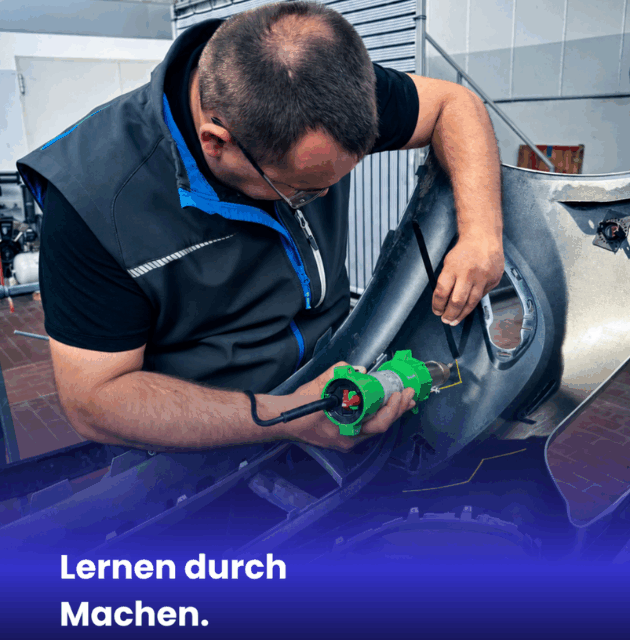
Bringing together technicians from multiple IRS locations, including Becker & Beckmann Berlin Tiergarten, Berlin Marzahn, IRS AZR, IRS Halle/Merseburg and IRS Dent Wizard, the two day workshop combined theory with extensive hands on practical training.
Participants developed advanced skills in bumper bonding, plastic welding, heating and reshaping techniques while gaining a deeper understanding of how modern repair methods can safely return damaged plastic components to service.
The workshop reinforced several important industry messages:
• Plastic repair extends well beyond cosmetic damage, with significant opportunities to repair structural and internal plastic damage.
• Many components traditionally replaced can be restored quickly, economically and to a high standard when technicians are equipped with the correct processes, training and materials.
This initiative represents exactly what the Plasnomic Framework was created to achieve—bringing together collision repairers, manufacturers, suppliers and technology partners to develop standardized repair methodologies, increase technician capability and reduce unnecessary parts replacement.
By connecting organizations such as IRS Group and 4Plastic & Mirka, Plasnomic is helping build a collaborative ecosystem that supports repair first strategies, lowers carbon emissions, reduces repair costs and advances the circular economy throughout Europe.
Congratulations to IRS Group, Mirka, trainers Marco Petermüller and Patrick Pantke, and all participating technicians for taking another important step towards the future of sustainable collision repair.
This is only the beginning, with further collaborative initiatives, training programs and industry first developments already underway through the Plasnomic network.
