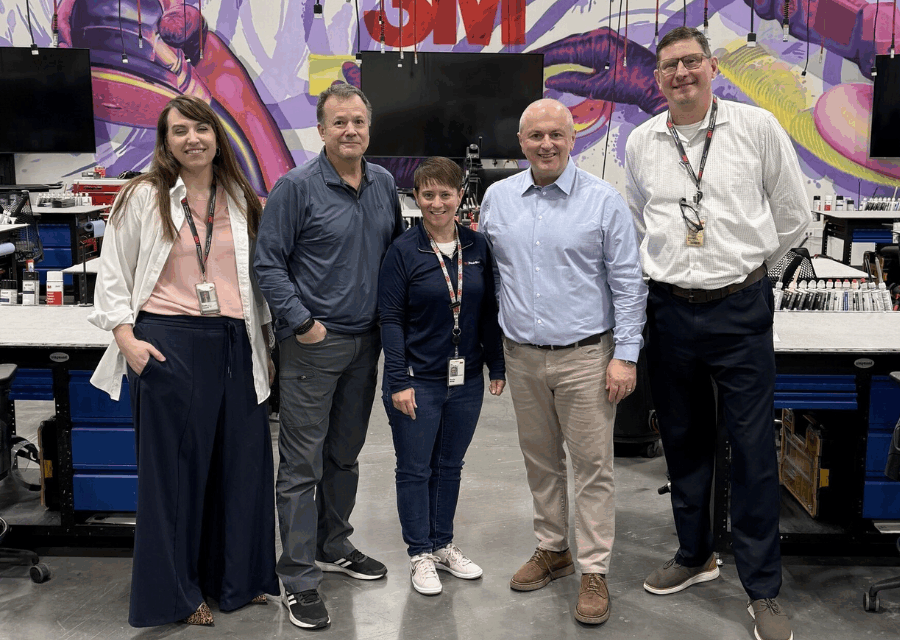
Mario Dimovski, Head of Council at Plasnomic, was recently hosted by 3M at their headquarters in St. Paul, Minnesota. The visit provided a valuable opportunity to strengthen collaboration with fellow Council Member Rebecca Miller and Technical Ambassador Shawn Collins as Plasnomic continues to build global momentum around plastic repair innovation and standards.
The day included discussions on the impressive progress of Plasnomic to date and strategic planning around the next phase of the initiative. Conversations also focused on how Plasnomic will explore new ways to develop, structure, and deliver industry best practices through its growing ecosystem of partners, training bodies, and digital platforms.
A key area of discussion centered on the development and validation of the first Plasnomic best practice frameworks, with an initial focus on polypropylene bumper cover repairs, the most frequently damaged plastic component in collision repair. These best practices will help create greater consistency in repair methods while supporting repair-first strategies across the industry.
Plasnomic’s Technical Ambassadors, to be anouced in April, will play a critical role in this process, working closely with engineering teams, product specialists, and collision repair experts to test, validate, and document repair processes. Their work will ensure that the best practices are practical for technicians, supported by material science, and aligned with safe and durable repair outcomes.
During the visit, valuable insights were also shared by Engineering Lead Dan Wittek and Product Specialist Elizabeth Harris, who contributed to discussions around materials, repair technologies, and opportunities for collaboration moving forward.
The visit also included a tour of 3M’s industry-leading skills development center, along with a showcase of innovative new solutions across collision repair, coatings, and abrasives.
3M’s continued support and collaboration are a tremendous credit to the Plasnomic global mission as the initiative accelerates the transformation of plastic repair and helps bridge the industry knowledge gap around repair-first strategies.